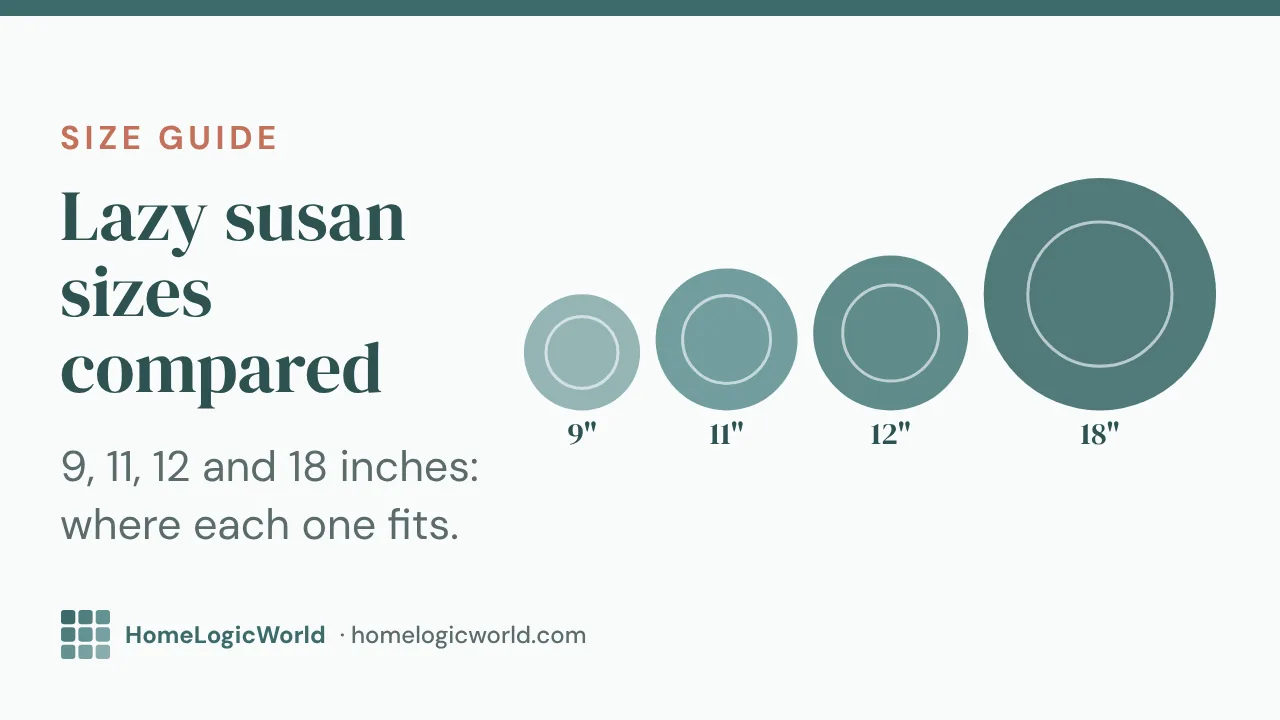
Lazy Susan Sizes Compared: 9, 11, 12 and 18 Inch Turntables
Which lazy susan size fits your cabinet, pantry, fridge or under-sink space, with four single-tier turntables compared at 9, 11, 12 and 18 inches.
How big a container you need for a bag of flour, sugar or rice, how long each one keeps, and how to keep pantry pests out.
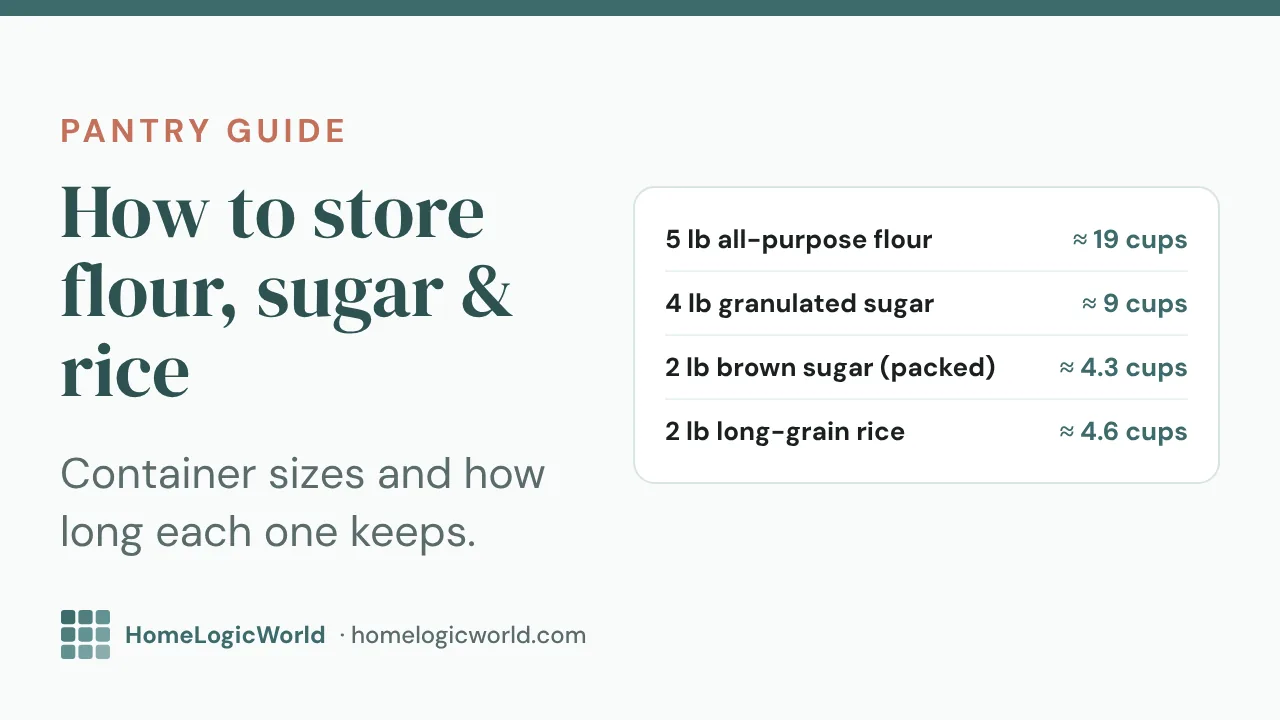
The short answer: store flour, sugar and rice in airtight, insect-proof containers that are big enough for a whole bag, label them with the purchase date, and use the oldest first. A 5-pound bag of all-purpose flour is about 19 cups, a 4-pound bag of sugar about 9 cups and a 2-pound bag of rice about 4.6 cups, so the container size matters more than most people expect. Whole wheat flour keeps for less time than white flour, so it is the one worth moving to the fridge or freezer.
Containers are sold in cups, but flour, sugar and rice are sold by weight. We converted common bag sizes using the King Arthur Baking ingredient weight chart (1 cup of all-purpose flour = 120 g, whole wheat flour = 113 g, granulated sugar = 198 g, packed brown sugar = 213 g, confectioners' sugar = 113 g, dry long-grain rice = 198 g):
| What you store | Bag size | Approx. volume | Container to choose |
|---|---|---|---|
| All-purpose flour | 5 lb | ~19 cups | 20 cups or more |
| Whole wheat flour | 5 lb | ~20 cups | 20+ cups, or split it and keep part in the freezer |
| Granulated sugar | 4 lb | ~9 cups | 12 cups |
| Brown sugar (packed) | 2 lb | ~4.3 cups | 6–7 cups |
| Confectioners' sugar | 2 lb | ~8 cups | 12 cups |
| Long-grain white rice | 2 lb | ~4.6 cups | 6–7 cups |
| Long-grain white rice | 5 lb | ~11.5 cups | 12–16 cups |
These are estimates: flour settles and compacts, and how full you fill each cup changes the result. Leave some headroom so you can scoop without spilling.
If you use the Rubbermaid Brilliance Pantry line, the sizes line up like this:
The 8-piece airtight set (3.2, 6.6, 12 and 16 cups) covers sugar and rice well, but its largest container holds roughly 4 lb of flour, not a full 5-lb bag.
The figures below come from the USDA FoodKeeper database. They are quality guidelines for dry storage, not hard expiry dates.
| Item | Pantry | Refrigerator |
|---|---|---|
| White flour | 6–12 months from purchase; 6–8 months once opened | 1 year once opened |
| Whole wheat flour | 3–6 months from purchase | 6–8 months once opened |
| Granulated, brown and confectioners' sugar | Does not spoil; best quality within 18–24 months of opening | Not needed |
| White rice | 2 years from purchase; 1 year once opened | 6 months once opened |
| Brown rice | 1 year from purchase; 1 year once opened | 6 months once opened |
Whole grain products keep for less time because they still contain the oil-rich germ of the grain. If you bake with whole wheat flour only occasionally, keep a small amount in the pantry and the rest in the fridge or freezer.
Brown sugar hardens as it loses moisture, so a well-sealed container matters even more for it than for white sugar.
Flour, rice and other dry goods are the foods pantry beetles and moths go for. Purdue University Extension recommends these prevention steps:
If you do find pests, throw out the infested product, empty and vacuum the shelf, and wash the containers before refilling them.
Write the product name and the date you opened it on a piece of tape or a label on the front of the container. When you refill, use the date of the new bag. It takes ten seconds and tells you at a glance which flour to use first.
About 19 cups of all-purpose flour, so choose a container of 20 cups or more. Whole wheat flour is lighter per cup, so a 5-lb bag is closer to 20 cups.
About 9 cups of granulated sugar, using 198 g per cup. A 12-cup container holds it with room to scoop.
It is not necessary for white flour, which keeps 6 to 8 months in the pantry once opened. Whole wheat flour keeps only 3 to 6 months in the pantry, so the fridge or freezer helps if you use it slowly.
No. According to the USDA FoodKeeper, sugar never spoils, but for best quality it should be used within about two years of opening.
Store them in insect-proof containers that close tightly, buy amounts you will use fairly quickly, keep the shelves clean and check packages before buying. Freezing dried foods also prevents pests from developing.
Which lazy susan size fits your cabinet, pantry, fridge or under-sink space, with four single-tier turntables compared at 9, 11, 12 and 18 inches.
A cluttered pantry wastes food, time, and mental energy. This step-by-step guide walks you through a pantry organization system that stays clean for months — not just hours.
Spice organization sounds simple until you have 40 jars and no space. We break down the six most popular spice storage methods, rank them honestly, and tell you which type of kitchen each one suits best.