How to Organize Your Spices: 6 Systems Ranked From Best to Worst
Spice organization sounds simple until you have 40 jars and no space. We break down the six most popular spice storage methods, rank them honestly, and tell you which type of kitchen each one suits best.
By HomeLogicWorld Editorial
Updated September 16, 2026
Spices are one of the most chaotic categories in any kitchen. They come in different sizes, shapes, and container types. They expire. They multiply. And they inevitably end up in a drawer where you shake every single jar to find what you need. Here are the six main approaches to spice organization, ranked from most to least effective for the average home cook.
Why Spice Organization Matters Beyond Convenience
Disorganized spices do not just slow you down. They cost you money. When spices are buried and invisible, you buy duplicates. When they are exposed to heat and light near the stove, they lose potency faster. A good spice system saves money and produces better food.
The 6 Systems, Ranked
1. Drawer Inserts with Uniform Jars (Best Overall)
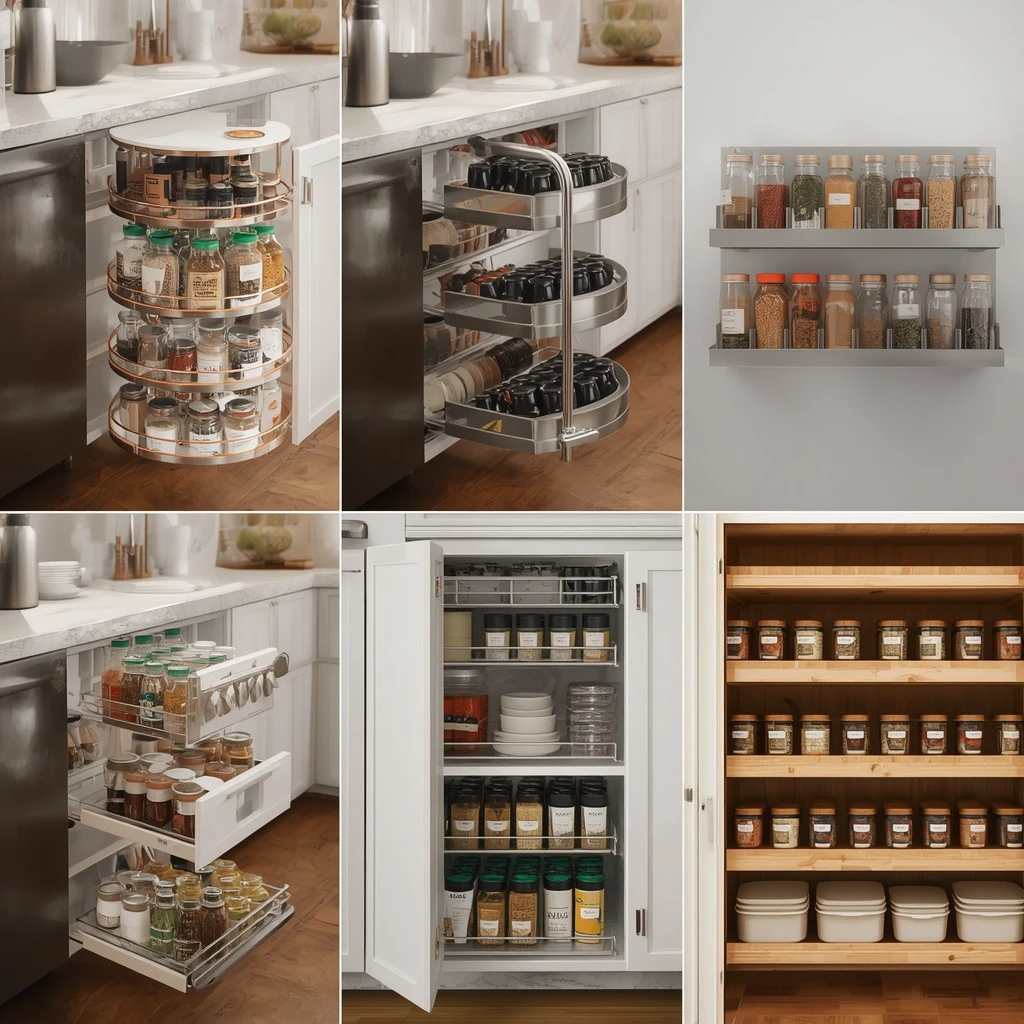
Transferring all your spices into uniform jars and storing them flat in a dedicated drawer with a labeled insert is the gold standard. Every spice faces up, labels are readable at a glance, and nothing gets buried. The upfront cost in time and money is real, but the long-term payoff is significant. Works best in kitchens with at least one available drawer near the stove.
2. Tiered Cabinet Shelf Organizer (Best for Most People)
A two or three-tier step shelf organizer inside a cabinet puts all jars at a visible angle without any decanting. This is the lowest-effort system that actually works. Labels face forward, jars are easy to grab, and setup takes under 30 minutes. The limitation is cabinet depth — some spice jars are taller than typical step heights.
3. Magnetic Wall Mount (Best for Small Kitchens)
Magnetic spice tins mounted on a metal strip or the side of the refrigerator free up drawer and cabinet space entirely. This works well in small kitchens where every square inch matters. The tradeoff is that magnetic tins are smaller than standard spice jars, so bulk spices do not fit, and you still need to decant everything.
4. Lazy Susan in a Cabinet (Good for Large Collections)
A rotating tray inside a deep cabinet works well if you have more than 30 spices and limited drawer or counter space. Spinning to find a spice is slower than looking down at a drawer insert, but it uses cabinet space efficiently. Two-tier Lazy Susans double the capacity.
5. Door-Mounted Rack (Situational)
An over-door or inside-door rack is useful when you have no other space, but it has real downsides: cabinet doors were not designed to bear much weight, and repeated swinging can loosen hinges over time. Limit this to lightweight spice packets rather than heavy glass jars.
6. Counter Rack (Least Recommended)
Countertop spice racks are the default impulse buy, but heat from the stove and sunlight from nearby windows degrade spice quality faster than any other storage location. If counter space is a premium in your kitchen, a countertop rack makes the problem worse, not better. Reserve counter space for things you use every single day.
Before You Buy Any Organizer: The Audit Step
Before choosing a system, audit your spice collection:
Pull every spice out and check expiration dates — dried spices are generally best used within 1–3 years of purchase
Discard anything that has lost its smell when you open the jar
Count what remains — your collection size determines which system fits
Measure your available space (drawer depth, cabinet shelf height)
Which System Is Right for You?
Under 20 spices, one cabinet shelf: tiered shelf organizer
20–40 spices, one available drawer: drawer insert with uniform jars
More than 40 spices, deep cabinet: double Lazy Susan
Very small kitchen, no drawer or cabinet space: magnetic wall mount
What to Look for When Buying Spice Jars
If you decide to decant into uniform jars, choose glass over plastic for longevity, airtight lids to preserve freshness, and a size that fits your available space. Square jars pack more efficiently than round ones in drawers. Check current options and pricing on Amazon.com.
The Labeling Question
Labels should go on the lid if jars are stored in a drawer (viewed from above) and on the front if jars are stored vertically. A label maker produces the cleanest results. If you prefer handwritten labels, use a fine-tip oil-based marker that will not smear.
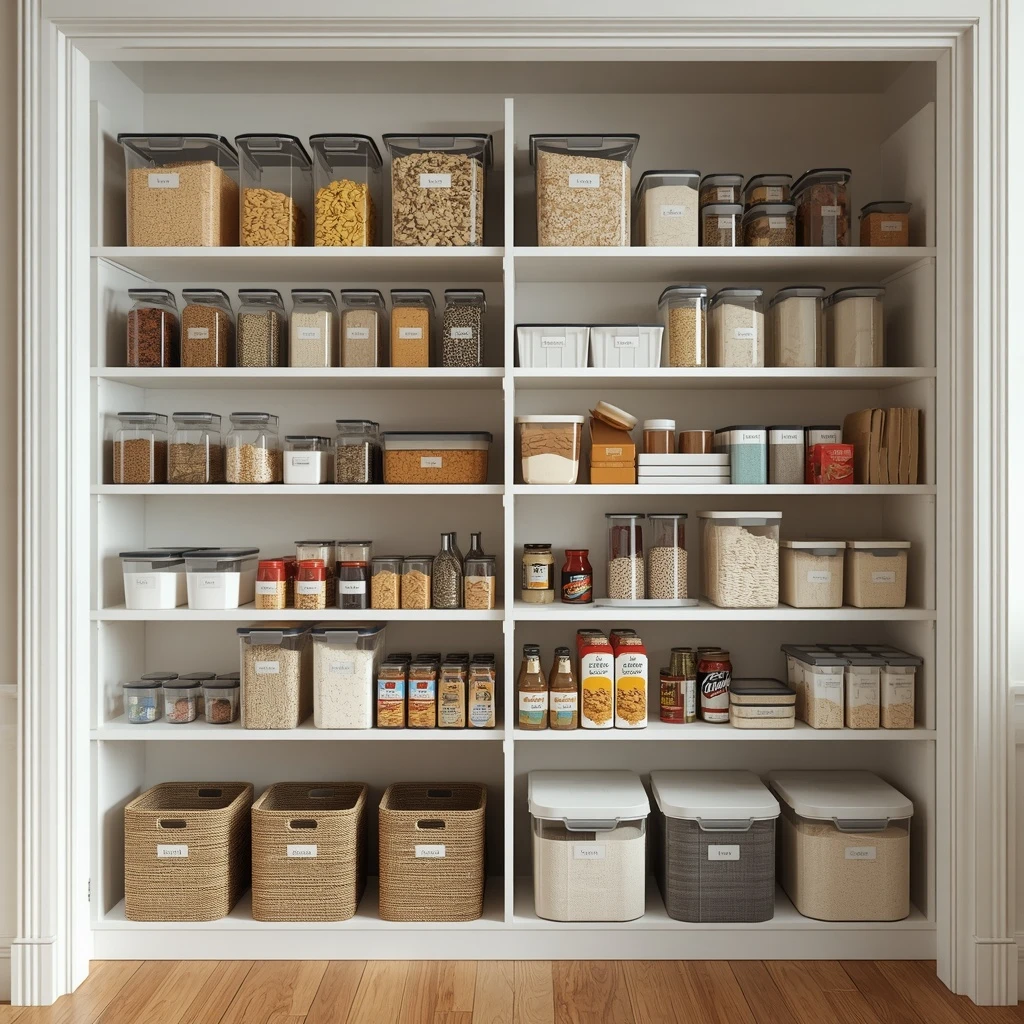
A cluttered pantry wastes food, time, and mental energy. This step-by-step guide walks you through a pantry organization system that stays clean for months — not just hours.
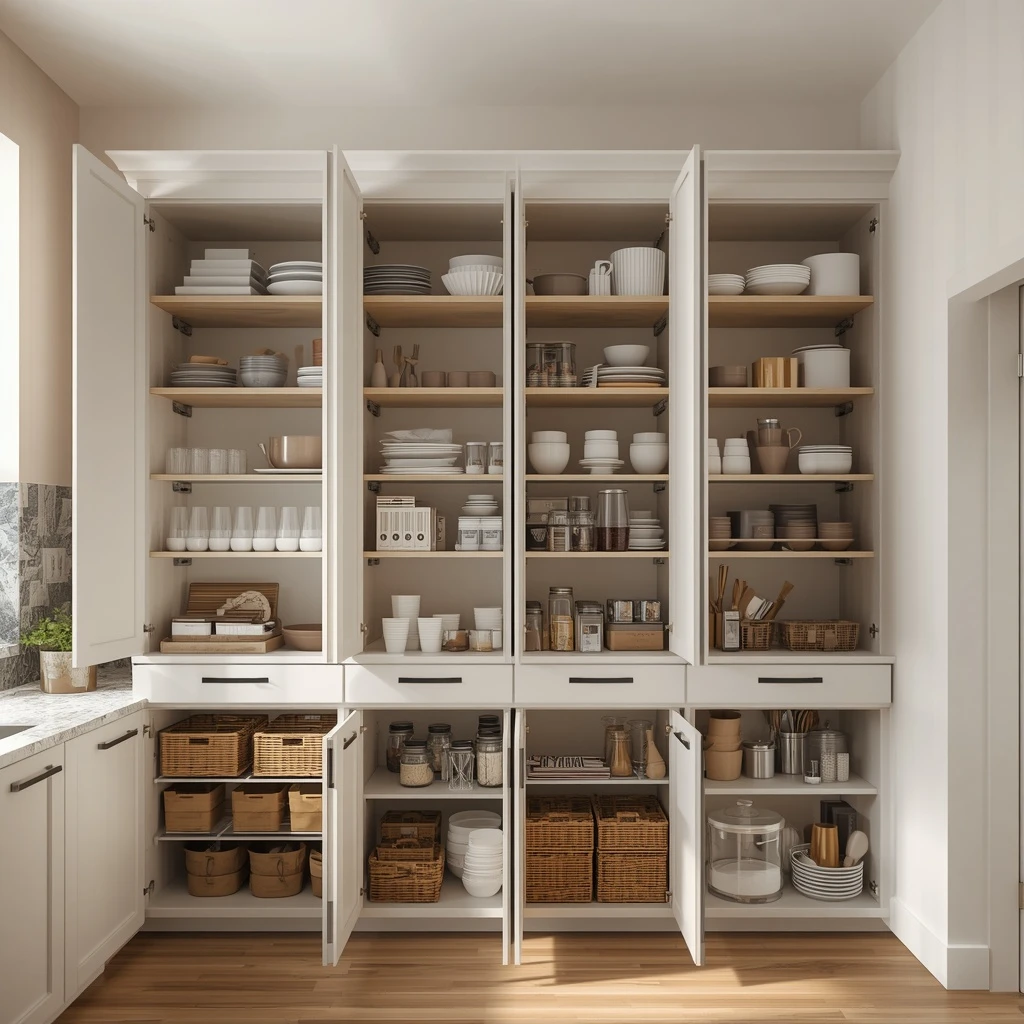
Cluttered kitchen cabinets make cooking harder than it needs to be. This guide walks you through a practical system to declutter, sort, and organize every cabinet in your kitchen — and keep it that way.