How to Organize Kitchen Cabinets: A Step-by-Step System That Actually Sticks
Cluttered kitchen cabinets make cooking harder than it needs to be. This guide walks you through a practical system to declutter, sort, and organize every cabinet in your kitchen — and keep it that way.
By HomeLogicWorld Editorial
Updated September 16, 2026
Kitchen cabinets are the engine room of your home. When they are organized, cooking feels effortless. When they are not, every meal becomes a scavenger hunt. The good news is that reorganizing your kitchen cabinets does not require buying a lot of products — it requires a clear system.
Step 1: Empty Everything First
Pull everything out of every cabinet before you make any decisions. Lay it all on your counter and kitchen table. This full-picture view reveals duplicates, expired items, and things that have not been touched in years. Wipe down the cabinet interiors while they are empty.
Step 2: Sort Into Categories
Group everything by function, not by where it used to live:
Daily dishes — plates, bowls, everyday glasses
Cookware — pots, pans, lids
Baking supplies — baking sheets, mixing bowls, measuring tools
Food storage — containers, lids, wraps
Pantry items — canned goods, dry goods, snacks
Small appliances — blender, toaster, coffee maker
Rarely used — holiday platters, specialty tools
Step 3: Assign Cabinet Zones by Frequency
The most important rule in kitchen organization is store things near where you use them. Map your kitchen into zones:
Cooking zone: cabinets next to the stove get cookware and oils
Prep zone: cabinets near the cutting board get knives, cutting mats, mixing bowls
Serving zone: cabinets near the table or island get plates and glasses
Storage zone: high or hard-to-reach cabinets get rarely used items
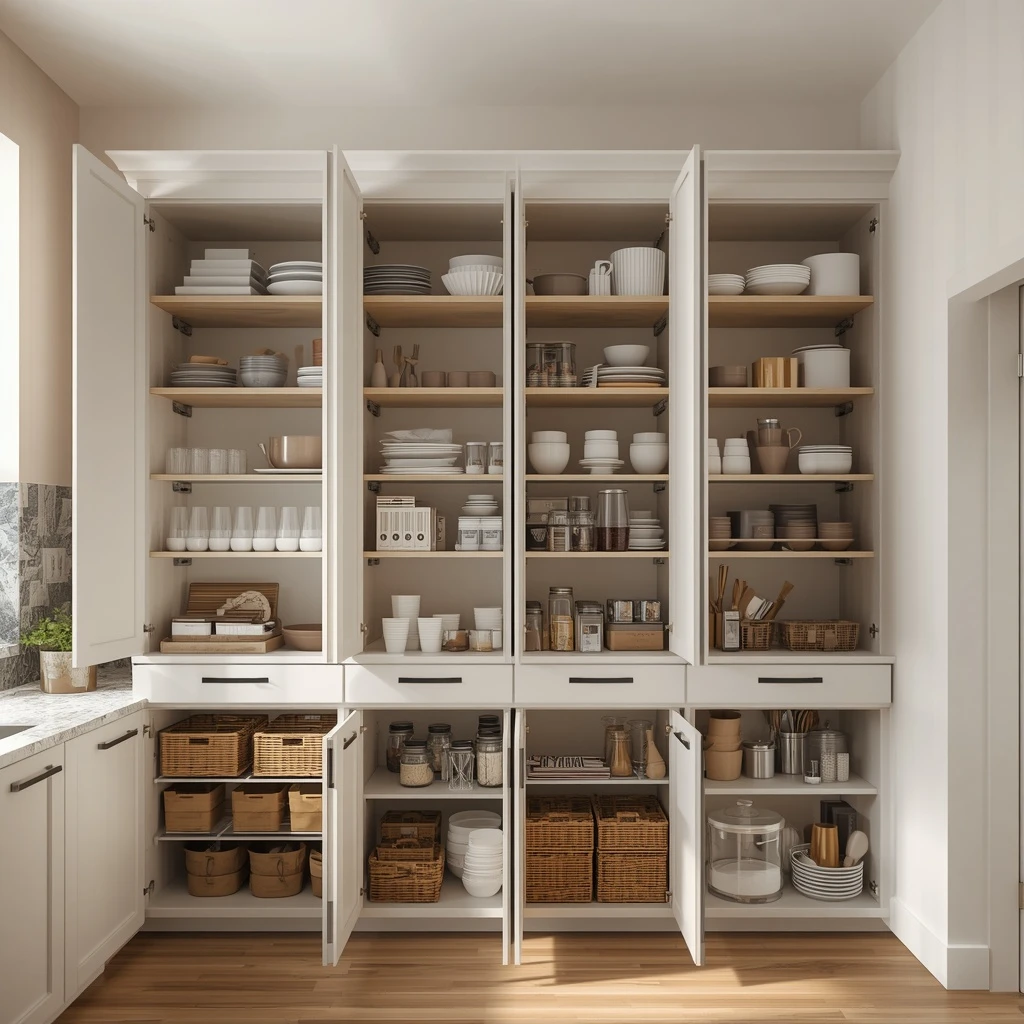
Step 4: Use Vertical Space Inside Cabinets
Most kitchen cabinets are deeper and taller than they need to be for the items stored in them. Stackable shelf risers let you double the usable surface area inside a single cabinet. Wire risers work well for plates and bowls; step risers are ideal for canned goods so labels face outward.
Step 5: Tackle the Lid Problem
Pot lids and food container lids are the number one source of cabinet chaos. The most effective solutions are:
A vertical lid organizer mounted inside a cabinet door
A dedicated drawer for lids stored upright
A cabinet shelf riser that creates a slot for lids behind their pots
If you use containers frequently, consider switching to a set where all containers nest inside each other and all lids are interchangeable — it dramatically reduces the storage footprint.
Step 6: Maximize Cabinet Doors
The inside surface of cabinet doors is underused storage space. Over-door organizers can hold:
Cutting boards and baking sheets (slim vertical slots)
Cleaning supplies under the sink
Spice packets and small jars
Measuring cups and spoons
Step 7: Label Everything You Cannot See
Labels are only necessary when the contents are not immediately visible. Opaque bins in pantry cabinets, drawers, and deep shelves benefit from clear labeling. Use a label maker or simple printed labels for consistency.
Step 8: Create a One-In, One-Out Rule
The most organized kitchen cabinet will drift back to chaos within months if there is no rule governing what enters. Every time you buy a new pan, pot, or kitchen gadget, remove the one it replaces. This single habit prevents gradual accumulation better than any organizer.
Products That Actually Help
These types of products address the most common kitchen cabinet problems. Verify availability and current pricing on Amazon.com before purchasing:
Stackable shelf risers (wire or bamboo)
Pull-out cabinet organizers for pots and pans
Over-door organizers with adjustable hooks
Vertical pan and lid racks
Lazy Susans for corner cabinets
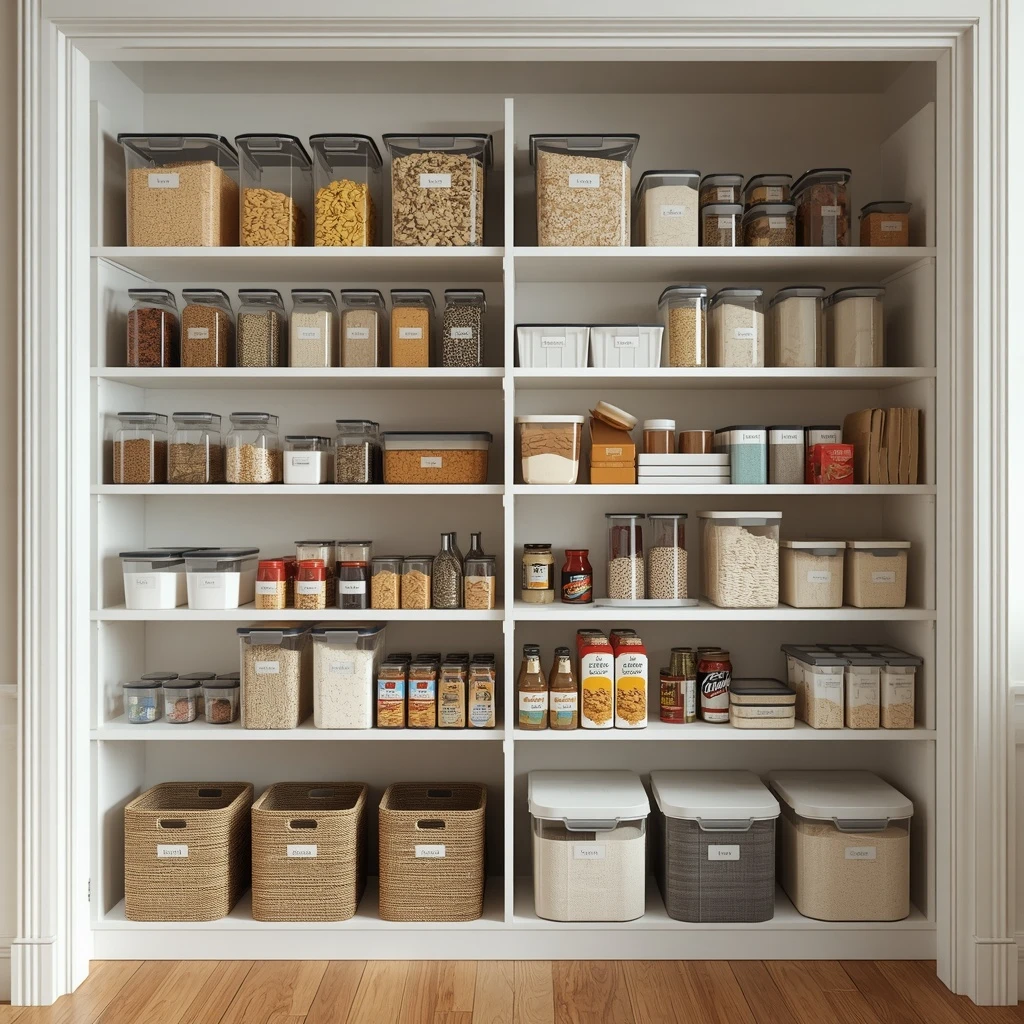
Clear stackable bins for pantry cabinets
How Long Will This Take?
A full kitchen cabinet reorganization typically takes 2–4 hours depending on the size of your kitchen and how much you own. Plan to do it on a weekend morning. Have trash bags and donation boxes ready before you start.
Final Thought
The goal is not a perfect Pinterest kitchen. The goal is a kitchen where you can find what you need in under five seconds and put it back in under three. Build the system around how you actually cook, not how you wish you cooked, and it will stick.
A cluttered pantry wastes food, time, and mental energy. This step-by-step guide walks you through a pantry organization system that stays clean for months — not just hours.
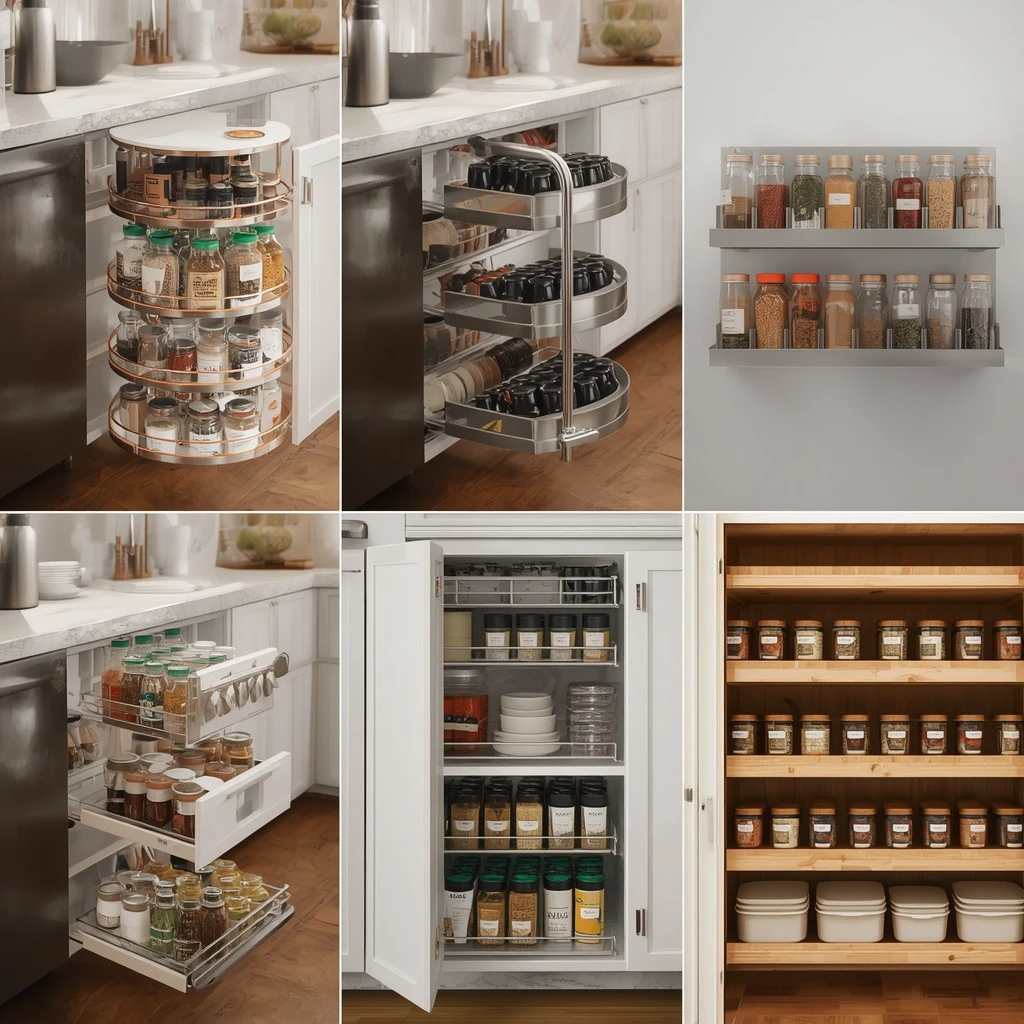
Spice organization sounds simple until you have 40 jars and no space. We break down the six most popular spice storage methods, rank them honestly, and tell you which type of kitchen each one suits best.