7 Ways to Add Storage in a Small Apartment Without Drilling Holes
Renting or living in a small apartment does not mean accepting clutter. These seven storage methods work without permanent fixtures, without power tools, and without sacrificing your deposit.
By HomeLogicWorld Editorial
Updated September 15, 2026
The Storage Problem in Small Apartments
Small apartments have two simultaneous problems: not enough built-in storage, and restrictions on what you can do to the walls. Most guides ignore the second problem, recommending shelving systems that require studs, brackets, and landlord approval.
This guide focuses exclusively on storage solutions that require no drilling, no permanent adhesives, and no permission.
1. Over-Door Organizers
Every door in an apartment is an unused storage surface. Over-door organizers hook directly onto the door without tools and hold everything from shoes to pantry items to cleaning supplies.
Key consideration: check the door thickness and clearance before buying. Most over-door organizers fit standard doors (35–40mm thick) but may not close properly in frames with tight clearance. Measure first.
Best uses:
Back of bathroom door for toiletries
Back of pantry door for spices and small items
Back of bedroom door for accessories and bags
2. Vertical Tension-Rod Shelving
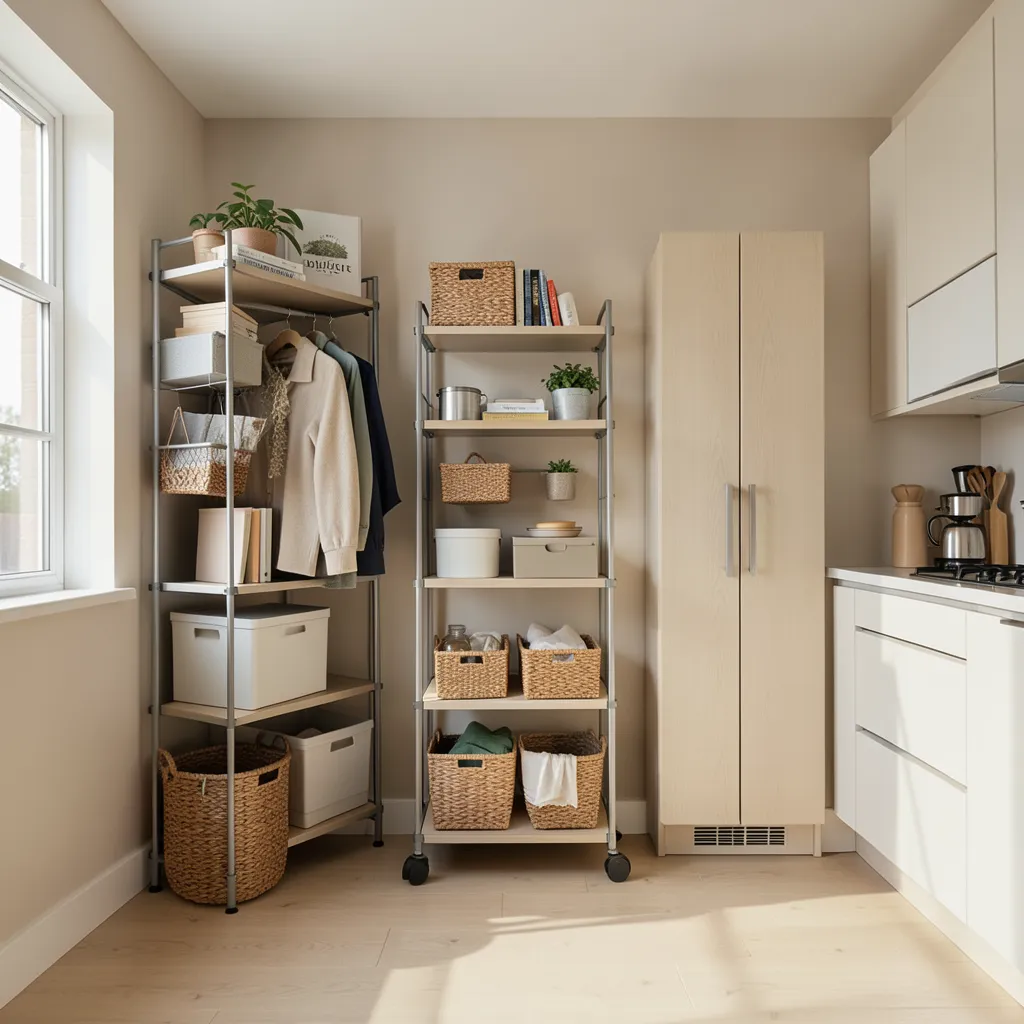
Tension rods are typically used horizontally, but a vertical tension pole between floor and ceiling creates a free-standing shelving unit that holds significant weight without touching the walls.
These systems, sold as "floor-to-ceiling shelving poles" or "tension shelf units," work particularly well in corners and narrow spaces. They adjust to ceiling height and come with or without shelves.
Load capacity varies — check the specifications before using for heavy items.
3. Furniture With Built-In Storage
When choosing furniture for a small apartment, storage should be a primary criterion, not an afterthought. Every piece should serve two functions.
The most impactful substitutions:
Ottoman with interior storage instead of a regular ottoman
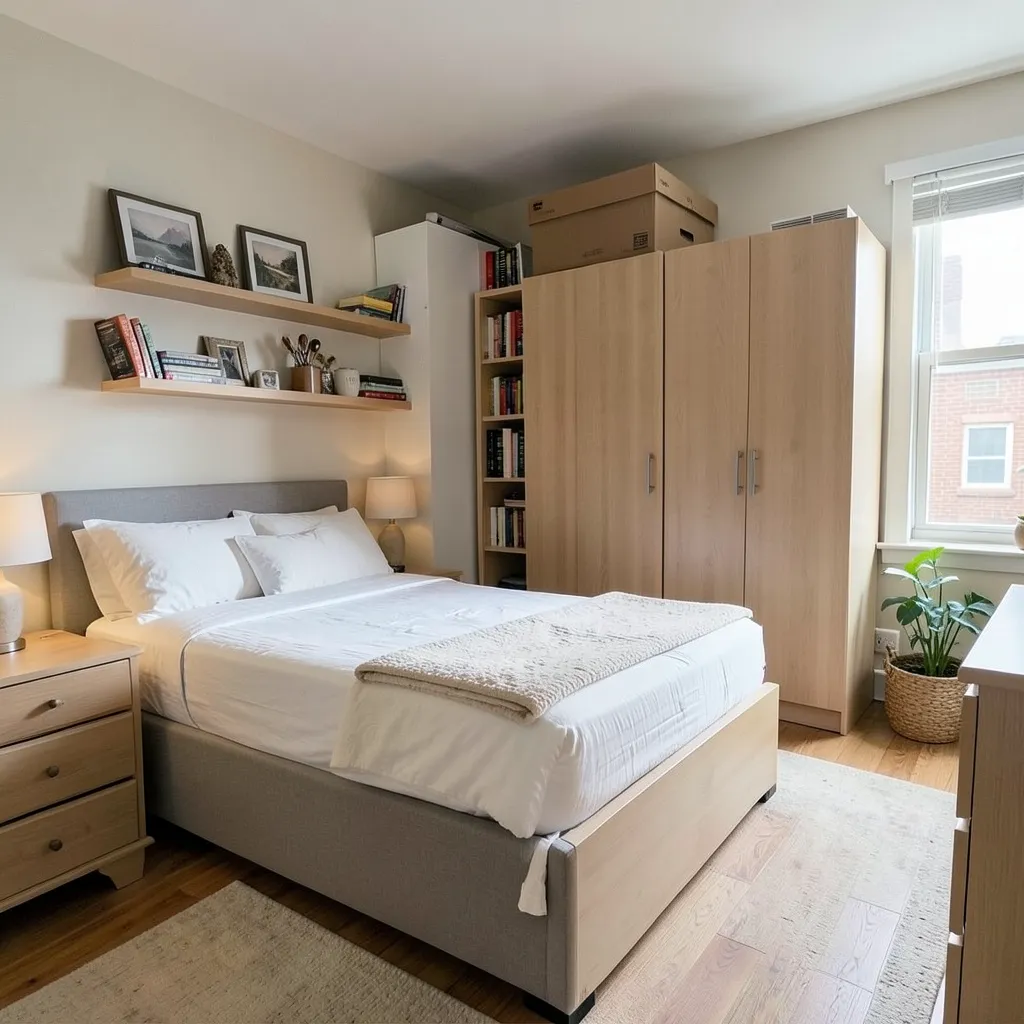
Bed with under-bed drawers instead of a standard bed frame
Coffee table with shelf or drawer instead of a solid top table
Dining bench with storage instead of chairs (when space allows)
This approach converts existing floor space into storage without adding any new footprint.
4. Under-Bed Storage
The space under a bed is typically 12–16 inches of clear height — enough for flat storage containers that roll in and out easily. This space is ideal for:
Seasonal clothing (swap winter and summer wardrobes)
Extra bedding and pillows
Shoe storage
Infrequently used items that take up closet space
If your bed sits too low, bed risers (plastic or wood blocks placed under each leg) add 3–5 inches of clearance without any drilling. Check that your bed frame is compatible with risers before buying.
5. Magnetic and Suction-Cup Wall Solutions
Strong magnetic strips and quality suction mounts can hold surprising weight on non-porous surfaces.
In a kitchen, a magnetic knife strip holds knives and metal utensils vertically on the side of a refrigerator — no wall contact needed.
In a bathroom, suction-cup shelves on tile or glass hold toiletries, soap dishes, and organizers without any damage to surfaces.
Key: use products rated for the weight you need and ensure surfaces are completely clean and dry before mounting.
6. Stackable and Modular Bins
Stackable clear bins are the most versatile small-apartment storage solution. They adapt to any space, show their contents without opening, and reorganize without tools.
The most effective use is in closets: a floor-to-ceiling arrangement of same-size bins on the closet floor replaces a dedicated dresser, freeing up a significant amount of bedroom floor space.
Buy all bins in the same brand and line to ensure they stack securely. Mixing brands of different sizes results in unstable stacks.
7. Hooks, Rails, and Pegboards
Command hooks (removable adhesive) handle up to 3.5–7.5 kg depending on the model and surface, which covers most hanging storage needs: bags, coats, kitchen tools, measuring cups, cleaning supplies.
A pegboard panel leaning against a wall (not mounted) with S-hooks and small baskets works as a functional kitchen or office wall organizer without touching the walls. Weight it slightly or use furniture feet to keep it from sliding.
For heavier items, tension rod shelving or furniture solutions are more appropriate than adhesive hooks.
Making It Work: The One Rule for Small-Space Storage
Every storage solution you add must eliminate a problem, not just add more capacity. Adding storage without reducing clutter means you will fill the new space and still feel cramped.
Before buying anything: identify the three worst clutter problems in your apartment. Buy solutions for those three problems first. Everything else can wait.
Living in a small apartment does not mean living with clutter. These 12 storage strategies focus on the spaces most people overlook — and the furniture choices that make small rooms livable.
Studio apartments require a fundamentally different approach to organization than larger homes. This guide covers the spatial strategies, furniture choices, and storage systems that make a small space feel open, functional, and calm.