Studio Apartment Organization: How to Live Well in 500 Square Feet or Less
Studio apartments require a fundamentally different approach to organization than larger homes. This guide covers the spatial strategies, furniture choices, and storage systems that make a small space feel open, functional, and calm.
By HomeLogicWorld Editorial
Updated September 16, 2026
Living in a studio apartment means every square foot has to work harder than it would in a larger home. The kitchen, bedroom, living room, and sometimes a workspace all share the same open floor plan. Done well, a studio apartment can feel spacious and comfortable. Done poorly, it feels cramped and chaotic from the moment you walk in. The difference is almost entirely organizational.
The Core Principle: Every Item Needs a Home
In a studio apartment, there is no room for homeless objects. The items that pile up on counters, chairs, and floors in a larger home take on enormous visual weight in a small space because there is nowhere else to look. Every item you own needs a designated storage location. If there is no location for it, it should not be in the apartment.
Zone Your Space
Even without walls, you can define zones in a studio apartment through furniture placement, rugs, and lighting. Typical zones in a studio include:
Sleep zone: the bed and its immediate surroundings
Living zone: seating area, defined by a rug
Kitchen zone: extends into a small dining area if present
Work zone: desk and chair, ideally facing a wall rather than the center of the room
Entryway zone: a small console table or hooks near the door for daily-carry items
The Bed Is Your Biggest Opportunity
In a studio apartment, the bed is typically the largest piece of furniture and occupies a significant portion of the total floor area. It is also a major storage opportunity:
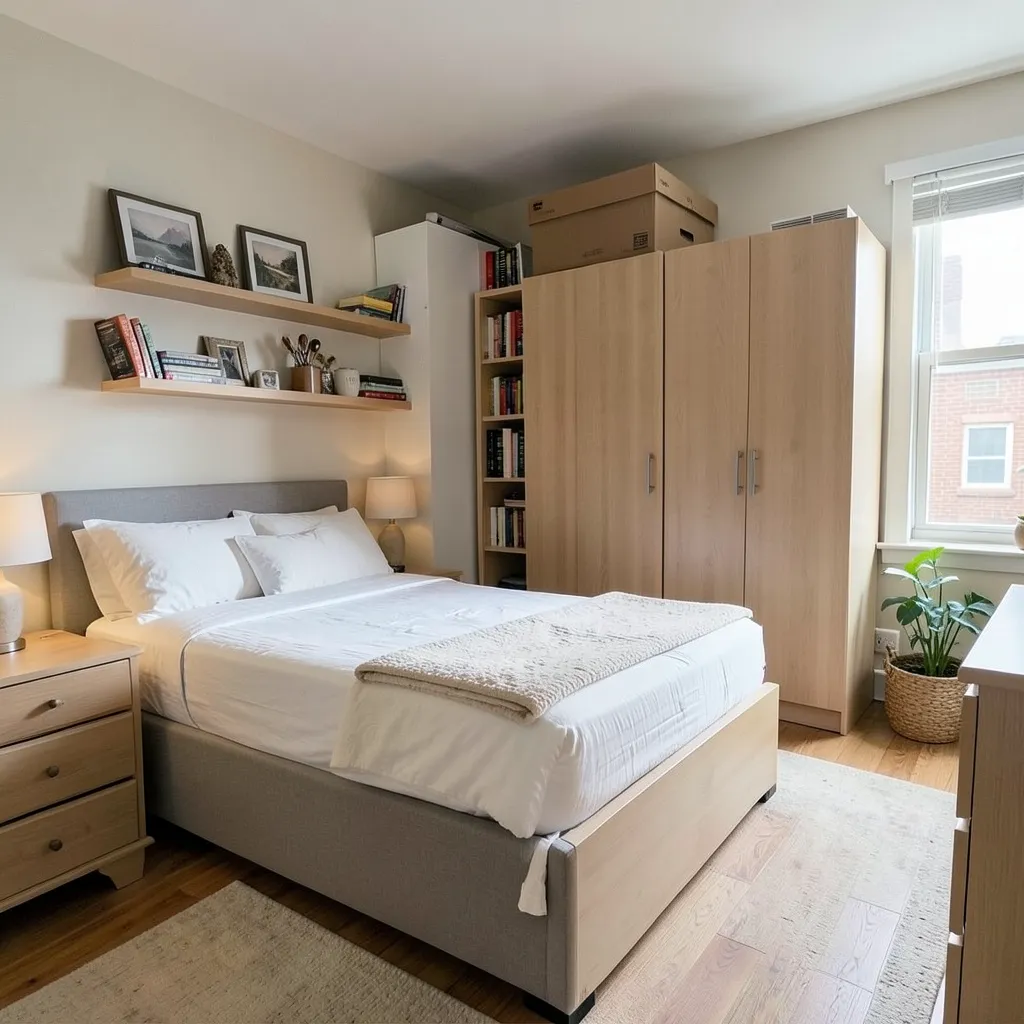
Under-bed storage: low-profile bins or drawers under the bed hold clothing, seasonal items, or extra linens. Risers elevate a standard bed frame to increase the storage clearance underneath.
Bed with built-in drawers: platform beds with integrated drawers eliminate the need for a separate dresser, freeing significant floor space
Storage ottoman at the foot of the bed: holds extra blankets or pillows and doubles as a bench
Go Vertical
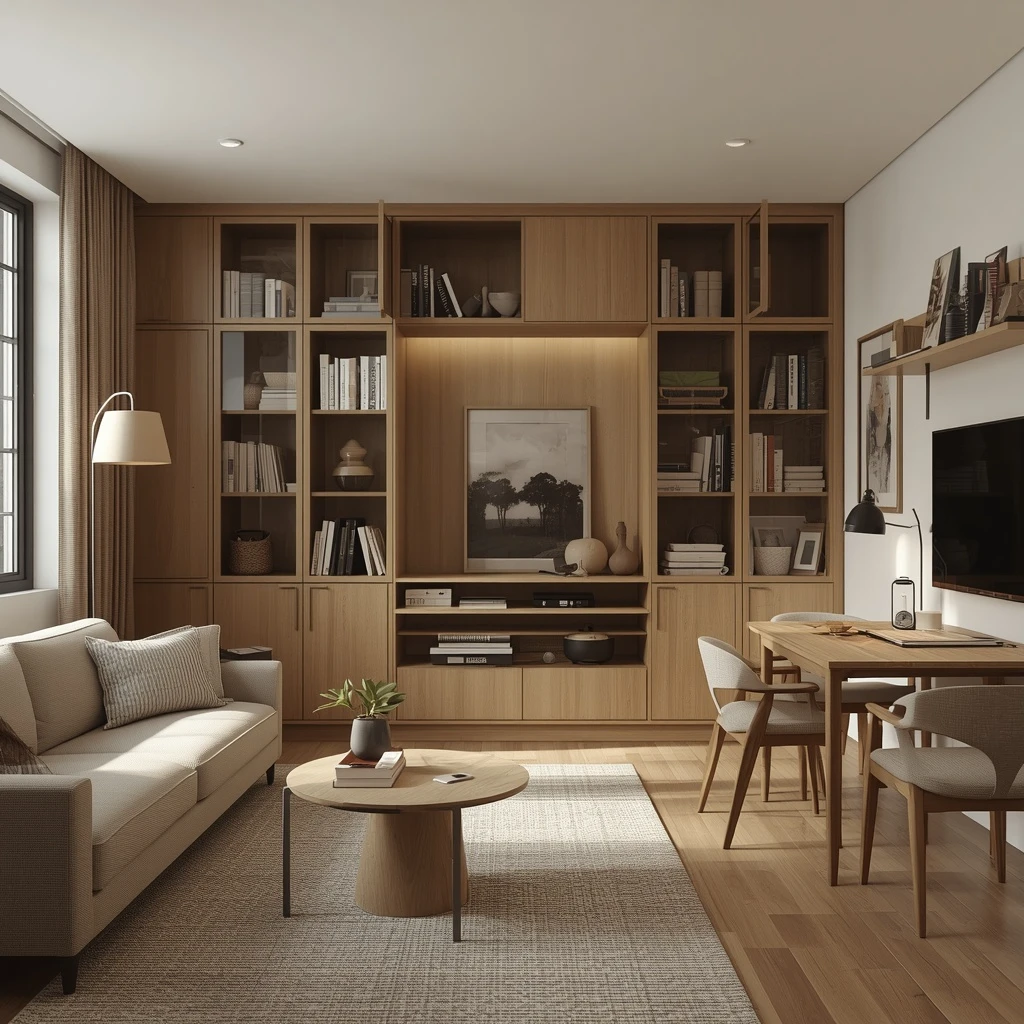
Vertical space — walls from mid-height to ceiling — is almost always underutilized in studio apartments. Wall-mounted shelving systems let you store and display items without occupying floor space. Float shelves above a sofa, a desk, or the kitchen area. Use the vertical space inside closets with shelf risers and double hanging rods.
Furniture That Does Two Jobs
Every piece of furniture in a studio should ideally serve more than one function:
A sofa bed for hosting guests
A fold-down wall desk (Murphy desk) that closes when not in use
A dining table that extends when needed and folds down when not
A coffee table with storage inside
A nightstand with drawers or shelves
A bookshelf that also functions as a room divider
Closet Organization Is Critical
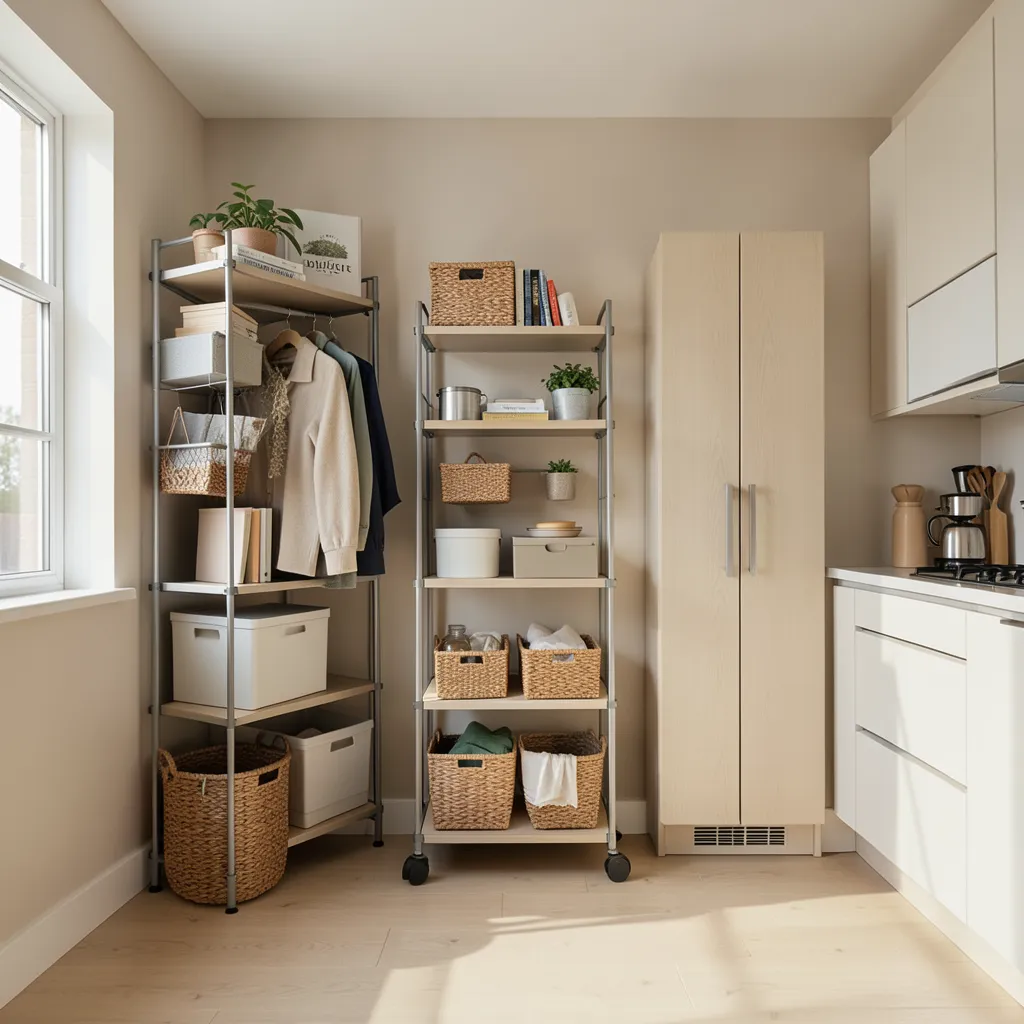
A studio apartment closet needs to work much harder than a closet in a bedroom-only configuration. If your studio has a small reach-in closet, a full closet organization system — double hanging rods for shirts and jackets, shelf organizers, a shoe rack on the floor, drawer units or cubbies — can double or triple its capacity compared to the standard single rod and one shelf most closets ship with.
The Kitchen in a Studio
Studio kitchen cabinets are often limited. Apply the same zone logic from a larger kitchen but compress it:
Keep the countertop completely clear except for items used daily
Use the inside of cabinet doors with door-mounted organizers
Store less-used items on higher shelves
A magnetic knife strip on the wall frees a full drawer
A wall-mounted or over-the-door pantry organizer handles dry goods if cabinet space is limited
Manage What You Own
The best organization system for a studio apartment is owning less. Not everything has to go — but before buying any organizer, evaluate whether the items you are trying to store are worth the space they occupy. Clothing you have not worn in a year, books you will not reread, kitchen tools that duplicate function — these are candidates for donation before they become a storage problem.
Visual Calm Matters
In a small space, visual clutter reads as physical clutter. Closed storage (cabinets, drawers, boxes with lids) keeps the eye from being overwhelmed. When open shelves or surfaces are visible, keep them intentional — a few objects with space between them rather than every inch filled.
Renting or living in a small apartment does not mean accepting clutter. These seven storage methods work without permanent fixtures, without power tools, and without sacrificing your deposit.
Living in a small apartment does not mean living with clutter. These 12 storage strategies focus on the spaces most people overlook — and the furniture choices that make small rooms livable.