Small Apartment Storage: 12 Ways to Create Space You Did Not Know You Had
Living in a small apartment does not mean living with clutter. These 12 storage strategies focus on the spaces most people overlook — and the furniture choices that make small rooms livable.
By HomeLogicWorld Editorial
Updated September 16, 2026
Storage in Small Apartments: Rethink the Space
Small apartments have less total storage space than larger homes, but they also tend to have significant unused space that most people never address. The ceiling, the backs of doors, the wall above furniture, and the space under every piece of furniture are all candidates for functional storage.
The 12 strategies below are organized by location in the home, starting with the areas that offer the most return per square foot.
Vertical Space: The Most Underused Resource
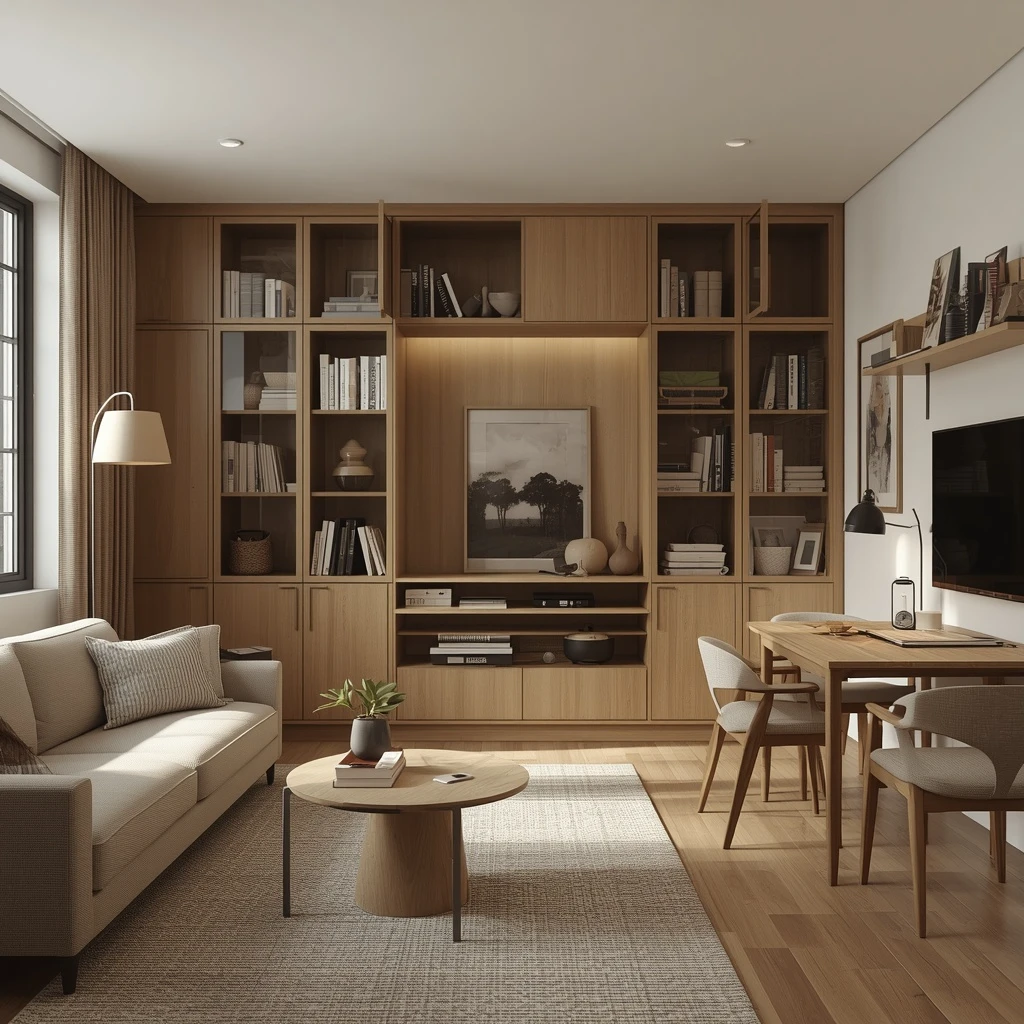
1. Shelving to the ceilingMost wall shelves stop at eye level, leaving 18–36 inches of usable wall space above them. Extending shelving to ceiling height stores items that do not need frequent access — books, boxes, seasonal items — and makes rooms feel taller rather than smaller.
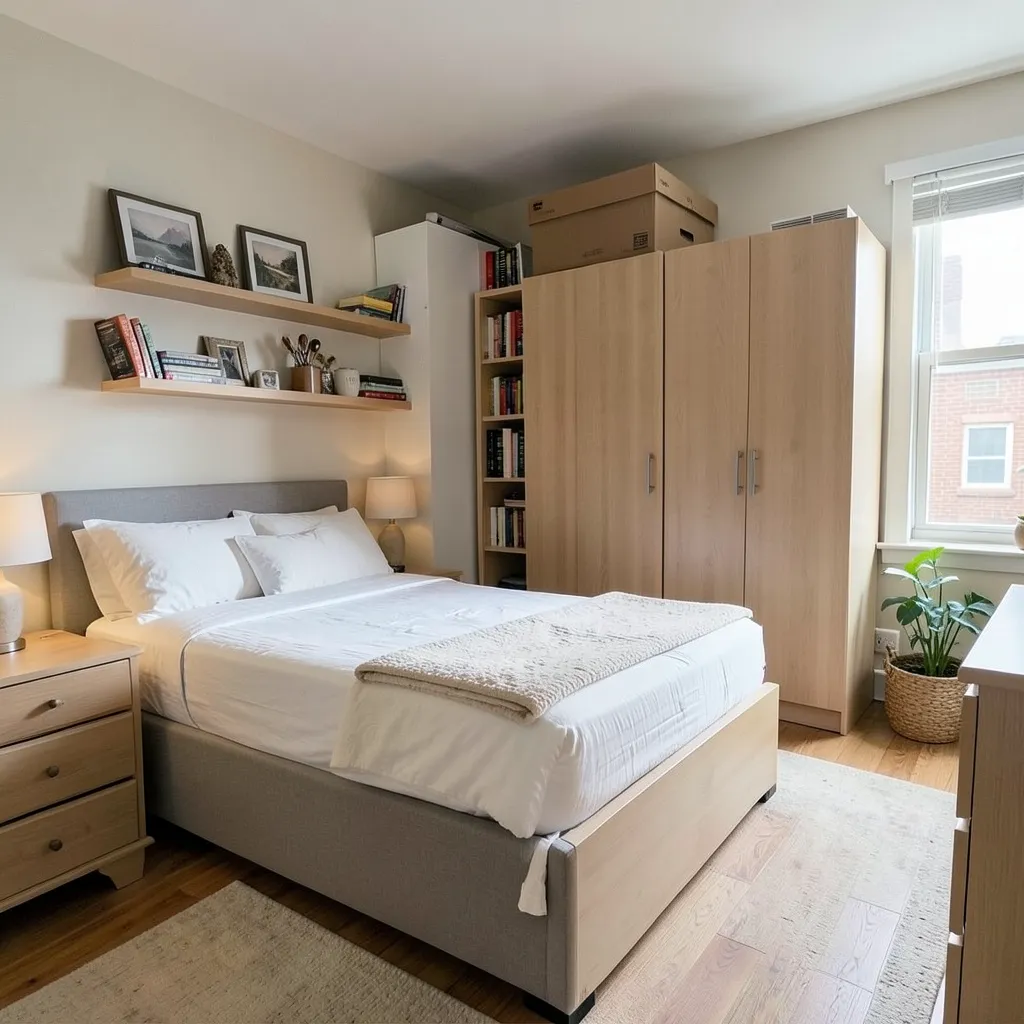
2. Tall furniture over wide furnitureA tall, narrow bookcase stores as much as a wide, short one while using half the floor area. In bedrooms, a wardrobe that reaches the ceiling eliminates the visual clutter of objects stored on top of furniture.
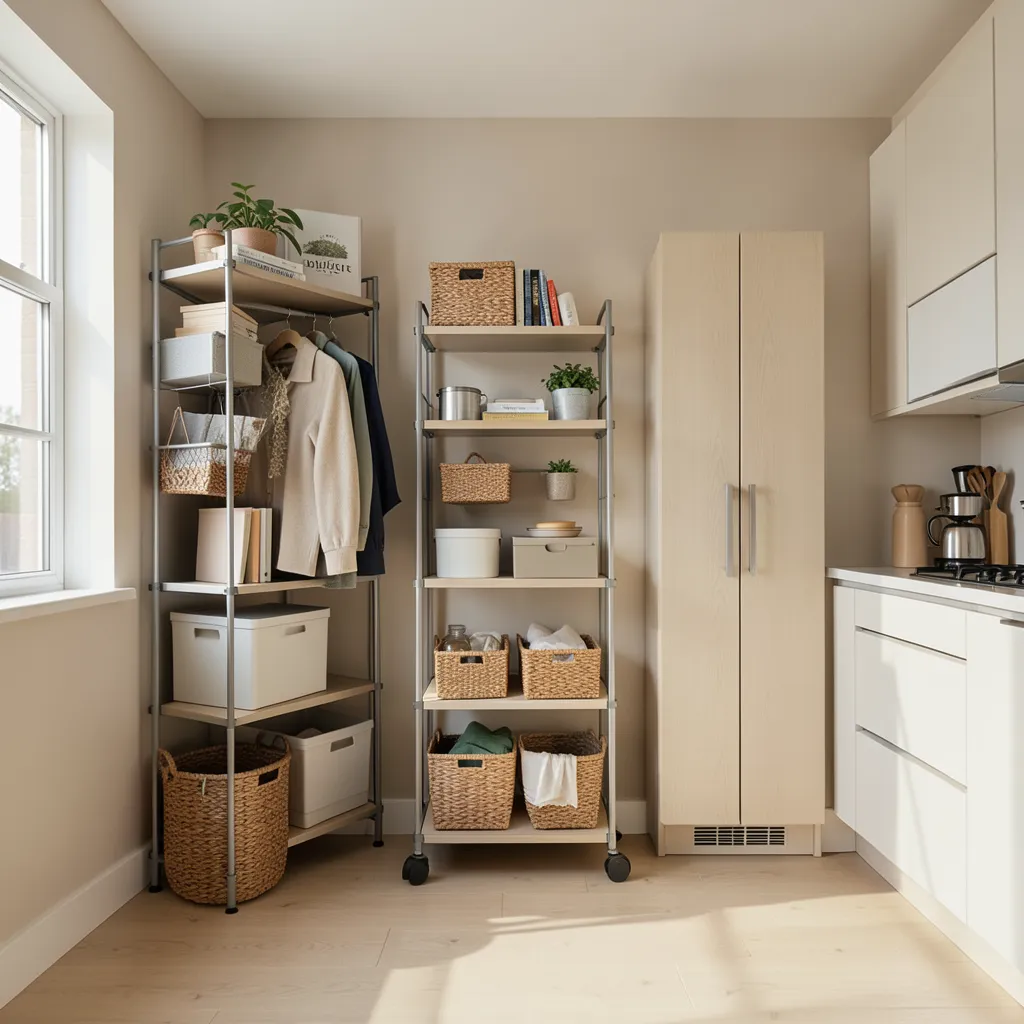
3. Wall-mounted instead of floor-standingMounting storage to the wall — bike hooks, tool holders, spice racks, nightstands — frees the floor area beneath them, which makes the room feel larger and makes cleaning easier.
Furniture with Built-In Storage
4. Bed frame with drawers or lift storageA bed with built-in storage eliminates the need for a separate dresser in a studio or one-bedroom apartment. Lift-storage beds (where the mattress lifts to reveal a large compartment) offer the most capacity; drawer-base beds offer more convenient access for everyday items.
5. Ottoman with interior storageA storage ottoman can simultaneously serve as a coffee table, extra seating, and a storage container for blankets, remotes, board games, and other living-room items that otherwise pile on surfaces.
6. Dining bench with storageIn apartments where the dining area is compact, a bench with internal storage along one side of the table replaces chairs (which are stackable when not in use) and provides storage for kitchen linens, bags, or shoes near the entry.
Kitchen-Specific Strategies
7. Magnetic knife strip and wall-mounted utensil holdersMoving knives and cooking tools off the counter and onto the wall frees significant counter space. A magnetic knife strip takes about 3 inches of wall depth; utensil rails can hold a full set of cooking tools.
8. Cabinet door organizersThe inside surfaces of cabinet doors are usually completely unused. Door-mounted racks can hold spices, cleaning supplies, cutting boards, foil and wrap, and pot lids — each of which would otherwise occupy shelf or drawer space.
9. Over-refrigerator shelvingThe space above the refrigerator is wasted in most kitchens. A shelf that fits the depth of the refrigerator can hold rarely-used appliances, bulk dry goods, or pantry overflow.
Bedroom and Entryway
10. Hooks everywhereHooks are the highest-efficiency storage per dollar in a small home. Behind doors, on walls, at the entryway — hooks handle bags, coats, scarves, umbrellas, and daily-use items that otherwise pile on surfaces. A row of hooks near the front door replaces the need for a coat closet.
11. Entryway storage benchEven a narrow entryway can accommodate a slim bench with hooks above it and storage below. This handles shoes (in the cabinet), coats and bags (on the hooks), and gives a place to sit when putting on shoes — solving three organizational problems with one piece of furniture.
12. Under-bed storageThe space under a bed is often 6–12 cubic feet of unused storage. Flat rolling containers work for most bed heights; vacuum storage bags compress linens and seasonal clothing significantly. (See our full guide on under-bed storage for details on choosing the right containers.)
What to Prioritize First
If you can only address one area, start with the furniture. Replacing a regular bed frame with one that has storage, or adding a storage ottoman, gives you more return than any number of bins and organizers added to a room with insufficient furniture storage.
The second priority is vertical space. Shelving to the ceiling and wall-mounted storage cost relatively little and can transform the storage capacity of any room.
Small organizational accessories — bins, hooks, door organizers — work best as the final layer, organizing storage that already exists, not creating it from scratch.
Renting or living in a small apartment does not mean accepting clutter. These seven storage methods work without permanent fixtures, without power tools, and without sacrificing your deposit.
Studio apartments require a fundamentally different approach to organization than larger homes. This guide covers the spatial strategies, furniture choices, and storage systems that make a small space feel open, functional, and calm.